Lately, I’ve had a few people asked me how I was doing. I have been asked if I was feeling better and if things were improving. I admit that I am still a bit surprised to be asked these questions. I think what it does indicate is how little is still known about ALS by the general public and the need for continued awareness and education.
Thinking about why I am asked if I’m getting better, I often wonder whether it may be because I try and have a positive attitude. Knowing that 80% of people with ALS die within 2 to 5 years of being diagnosed, and I have just passed two years since my initial diagnosis, I have fully accepted whatever I fate is. I think that is something very difficult for people to grasp, which may be why I keep getting asked if I’m getting better. Maybe I should clarify the question and explain again that people with ALS do not get better. I will have to give that some thought.
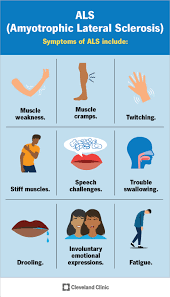
It could also be that I am still working. What people don’t know or realize is the effort it takes me to continue working. It is very difficult for me to type or use my hands for extended periods of time. I use voice to text software but sometimes it doesn’t function as well as I hope, or I am trying to do multiple things at once and him unable to use the software, so I end up using my keyboard to accomplish activities. The challenge with this is I have to make the choice knowing the pain I will be in by doing these activities.
Prior to my diagnosis I would be able to do many activities while working. I would be on a conference call, working on a presentation, updating a spreadsheet and replying to messages – either emails or Teams messages. Now, I know doing these multiple activities at the same time require me to use my hands. The downside is I know my hands will cramp up and they will spasm. So, I make the choice to continue to try and be as productive as I once was at the cost of knowing I will suffer the consequence of pain later on.
What does this consequence look like? After one particularly busy day a few weeks ago where I overexerted myself, my hands and arms were cramping and spasming quite badly. I was unable to hold my water bottle and it hurt to pick up utensils to try and eat. I decided to go and rest in my red leather recliner which I call ‘Big Red’ and try to relax for the rest of the evening. As I sat in Big Red my right arm was spasming so much my hand was constantly flapping. Just picture it, sitting in Big Red, holding my twitching arms with my right hand waving back and forth. It was very frustrating.
When I went to bed my arm was still spasming but not as bad. In the middle of the night, though, I was awoken by what I thought was my wife poking me because I was snoring too loud. In fact, it was my hand flapping back-and-forth and unfortunately my head was in the way. So, I was actually smacking myself in the head at this steady pace… smack, smack, smack. I laid there as my hand continued to slap my forehead and I just smiled. It was kind of funny. I took a deep breath, rolled over and touched my arm under my body so I wouldn’t continue smacking myself in the forehead. Thankfully I was able to get back to sleep.
Since then, I have been making much more of an effort not to do multiple activities at the same time. Having said that, even doing simple activities still cause pain and weakness in my arms and hands, including decreased grip strength. But I have accepted that so long as I adjust what I do and how I do things then it is manageable.
For people with ALS, their muscles are constantly degenerating. Depending on a person’s progression, the ability to use their limbs is no longer an option because the limbs can no longer respond to signals from the brain. For others, the impact affects their ability to speak, swallow and breathe. For some, everything is impacted.
To try and relate what it is like for me living with ALS, try the following:
- Make a fist with your hand and wrap a thick rubber band around the fist so it is difficult to open. You can use a rubber band from a bunch of broccoli. This simulates the decrease in range of motion from hand cramping.
- Next, attach a weight along your hand and forearm – a 5lb dumbbell or metal pipe would do. This helps to simulate the restrictiveness experienced from spasms.
- Perform activities for 15 minutes such as: texting/typing, household chores or drinking a glass of water. This will simulate the fatigue experienced through overuse.
- Imagine if both arms were like this.
- Imagine if they were like this every day.
- Now, imagine if this happening with your legs at the same time.
This doesn’t factor in the pain from cramping and spasms, nor does it consider the loss of balance when trying to walk. I often describe days when I’m really tired as feeling like a newborn giraffe (albeit a short one with a bit of a belly), stumbling around trying to gain my footing while making sure there is always something close to grab onto.
The next time I am asked whether I’m feeling better maybe I will reply by saying so long as I don’t do anything I feel okay. I will continue having a positive outlook, or as positive and outlook as I can, despite knowing I cannot do many of the things I used to. I will keep doing activities as long as I can and figure out ways to adapt. It is all part of the acceptance.
I keep telling everyone I will be around for another 20 years, and I will keep trying to do whatever I can to make that happen. What I can’t guarantee is how gracefully those 20 years will progress, but we will cross that bridge when we get to it. Life is full of challenges, and this is just one more challenge to overcome.


 My ALS Challenge
Leave a comment