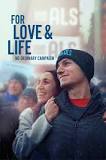
On May 28, 2024, the documentary ‘For Love & Life: No Ordinary Campaign’ was released on Prime Video. This film tells the story of Brian Wallach, who diagnosed with ALS in 2017 at the age of 36. Wallach, along with his wife Sandra Abrevaya, went on to launch the non-profit organization in the United States called ‘I AM ALS’.
Before being diagnosed, he was a lawyer, had worked on Barack Obama’s first presidential campaign and joined the White House counsel’s office in 2011 before becoming a federal prosecutor in the US Attorney’s Office in Chicago.
But, as like every other person diagnosed with ALS, after testing had ruled out all other possible causes of his symptoms, he received his diagnosis. He had ALS and was given six months to live.
It was a similar message every person diagnosed with ALS receives:
You have ALS. There is no cure. Start getting your affairs in order.
Thankfully, Wallach and Abrevaya, decided to do a little more than just get their affairs in order. They launched I AM ALS in 2019 and, later that year, testifying before US Congress, argued that Congressional committees rarely heard from ALS patients “because ALS is a relentless churn. We diagnose. We die, quickly. We don’t have time to advocate.”
The documentary explains this far better than I can. What I can talk about is my experience when I watched it.
First off, I was nervous about watching the documentary, but I wasn’t sure why. I knew about I AM ALS. They have done great work advancing legislation, funding and bring awareness of ALS in the US.
As mentioned earlier, his story was very similar to every other ALS patient. Nobody expects this diagnosis. It is always a shock when you are told there is no cure and you have 2 -5 years to live, with progressive decline before you die.
Like so many others, you try and learn as much as you can to fight the unstoppable onslaught of this disease. You ask questions like: “What drug trials are there I can participate in? How come it takes so long to get potential treatments approved? Why are there not more funded support services? Why are there so few treatment options?
These questions are not easy to answer. Over the last 10 years, there have been great strides to increase research, identify treatment options and hopefully find a cure. We are not there, but we are getting closer.
The challenges faced and overcome by IAM ALS, while knowing there were people ALS dying every day as they fought for legislation and funding to be approved, though gut wrenching and hard to watch, were important to both hear and understand.
Brian Wallach’s symptoms started with muscle tremors and weakness in his left hand. These were symptoms similar to mine. As I watched the documentary, I felt like I was looking in a mirror. At one point, there was a scene where Wallach was typing on a keyboard. The muscles in his left hand had visibly atrophied. It looked like my hand, albeit my right hand. Time paused for a moment. My eyes welled up. I was watching what the future holds for me. I was watching the future me.
My wife turned to me and asked if I was okay. I choked out a “Yes”. She asked if I was sure. Again, I said “Yes”. I owed it to Brian and Sandra, I owed it to all the people living with ALS and to those who lost the fight with ALS. Most important, I owed it to myself.
I am glad I watched the documentary and encourage others to watch it as well. It gets what it is like living with ALS bang on.
As someone living with ALS, I am thankful for this documentary. I will continue doing my part, as little as it may be, and continue bringing ALS awareness where I can.
What I will say is this:
ALS is not well funded because it is considered a rare disease. In Canada, there are about 4,000 people currently living with ALS. Approximately every year, 1,000 people die from ALS and 1,000 are diagnosed.
Here’s a thought, if life expectancy was able to be extended beyond the current 2-5 years for a majority of ALS patients, how many people in Canada would be living with ALS today? Would ALS still be considered a rare disease?
Brian Wallach and Sandra Abrevaya started I AM ALS. They have made tremendous strides that nobody ever thought possible. They brought attention and awareness to the highest levels in the US for those living with ALS.
If I am to continue advocating for greater ALS awareness, I am not going to hide now. I started sharing my journey whether good, bad or indifferent. This was just another type of lemon to help me continue making my version of lemonade.

 My ALS Challenge
Leave a reply to Dan Eichner Cancel reply